


Why Do My Bottom Teeth Look More Crowded Than They Used To?
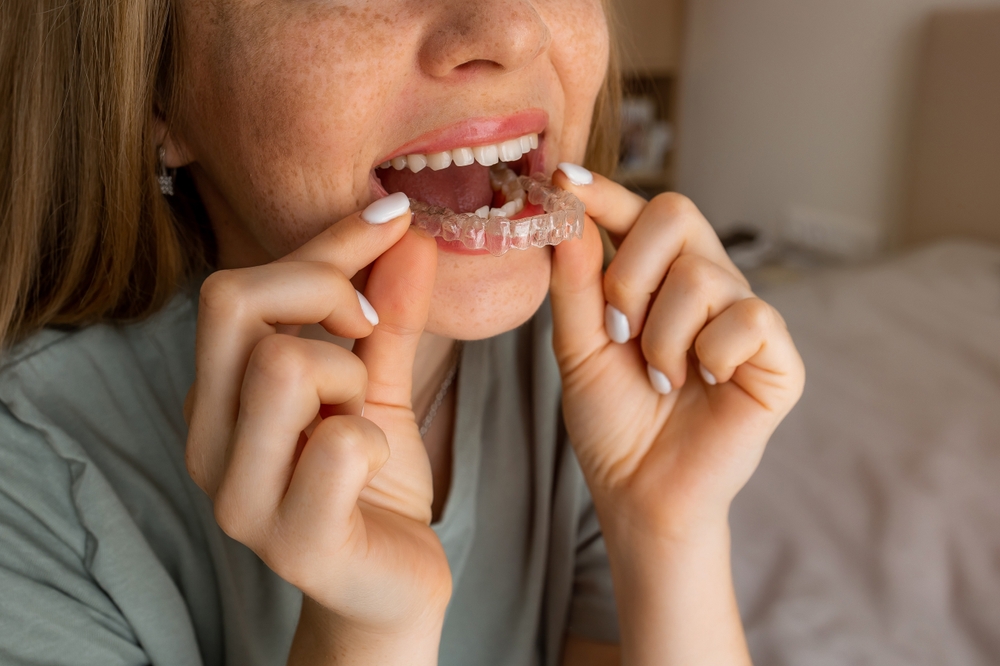
Maybe you noticed it while flossing. One of your bottom front teeth now sits slightly behind its neighbor, and you could swear it used to be straight. This kind of crowding often develops gradually in adulthood, even if you’ve never had braces or Invisalign.
Why do the bottom front teeth shift?
Your teeth are held in place by bone and tiny ligaments. These tissues change throughout your life, so your teeth can shift well into adulthood. When the lower front teeth have less room to sit side by side, a tooth may turn slightly or tuck behind its neighbor. You might first notice it when floss feels harder to slide between two teeth or when you compare your smile with an older photo.
What if I already had braces or Invisalign?
If you’ve had orthodontic treatment, your teeth can shift afterward, especially if you wear your retainer less often than prescribed. This is called orthodontic relapse. It can look like a tooth rotating back toward its original position or a familiar overlap returning.
If an old retainer won’t fully slide into place, avoid forcing it and bring it to your dentist or orthodontist. They can check how much your teeth have shifted and whether a new retainer or further treatment makes sense.
Can Invisalign straighten crowded bottom teeth?
Invisalign can treat many cases of lower crowding. Each set of clear, custom-made aligners moves selected teeth a little at a time. For a tooth tucked behind its neighbor, the plan may first need to make enough room for that tooth to turn and move into line.
Even if you’re only concerned about one bottom tooth, your dentist will check how your upper and lower teeth meet. For example, if an upper tooth bites close to the crowded lower tooth, your dentist will consider where those teeth will meet once the lower tooth moves. They’ll also check the health of your gums and the bone supporting your teeth before recommending treatment.
Once treatment is complete, wearing your retainer as directed helps keep your teeth in their new positions.
When should I get it checked?
If your teeth have shifted slowly, bring it up at your next dental visit. If the change seems sudden, a tooth feels loose, or your gums bleed regularly, schedule an exam sooner. Your dentist can check whether gum disease or another dental issue is contributing to the movement.
If the crowding bothers you, an Invisalign consultation can help you understand what’s changed and whether clear aligners are a good fit for your bite and goals.


Featured Services
Contact Info
Hours of Operation
- Monday 9:00am - 6:00pm
- Tuesday 8:00am - 8:00pm
- Wednesday 9:00am - 6:00pm
- Thursday 8:00am - 6:00pm
- Friday 8:00am - 2:00pm
- Saturday Closed
- Sunday Closed
© 2026 Paglia Family Dental. All rights Reserved.
Accessibility Statement - Privacy Policy - Sitemap
Powered by:
